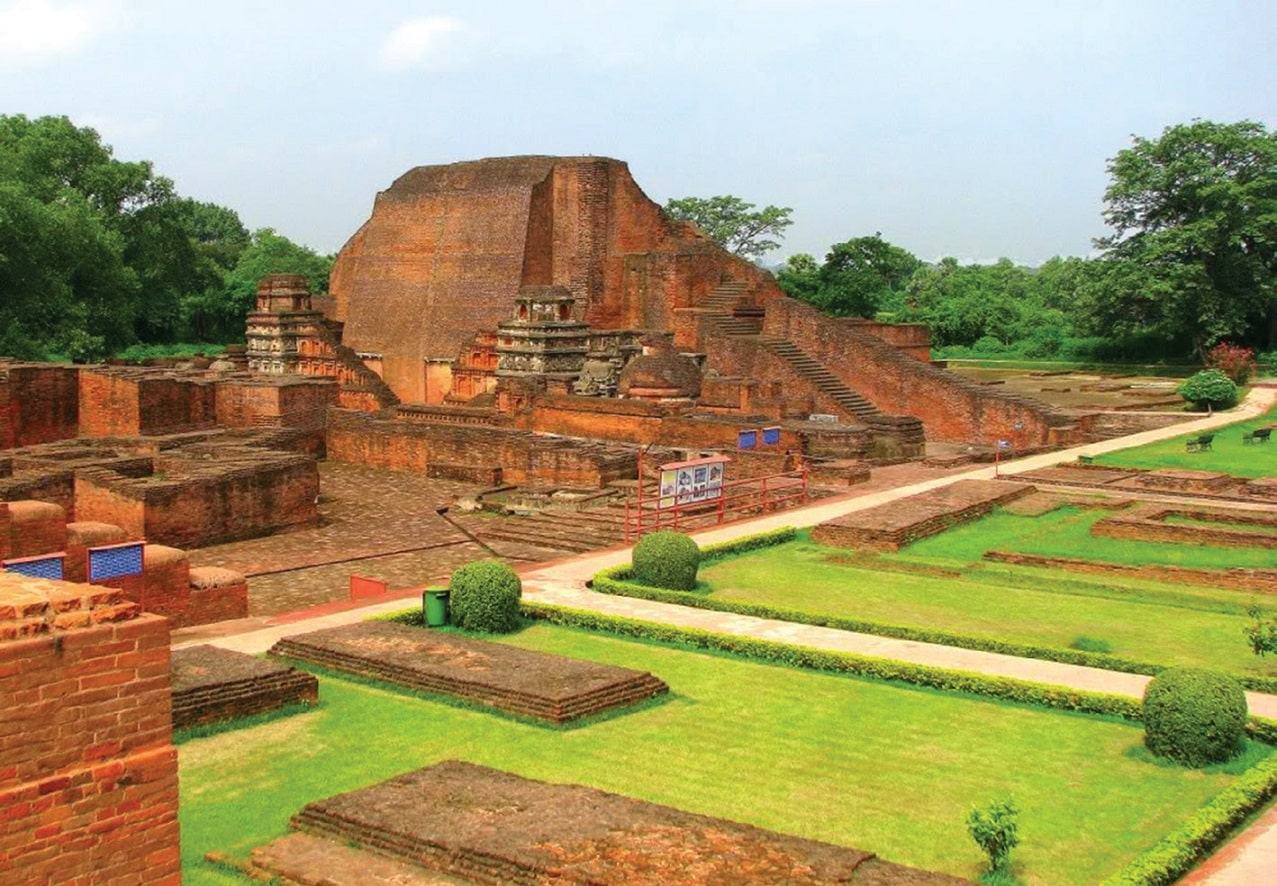
Nalanda Mahavihara
The world's first residential university, where more than 10,000 scholars once studied logic, medicine and astronomy — a thousand years before Oxford. Today a UNESCO World Heritage Site.
Empires, enlightenment and living heritage — 2,500 years of Bihar's story, told with the depth it deserves.
The world's first residential university, where more than 10,000 scholars once studied logic, medicine and astronomy — a thousand years before Oxford. Today a UNESCO World Heritage Site.

Beneath the Bodhi tree here, Prince Siddhartha became the Buddha. The spiritual heart of the Buddhist world, it draws pilgrims from Japan, Thailand, Sri Lanka and beyond.

The first capital of Magadha and the seat of the world's earliest republic, where the Licchavi assembly governed by vote — centuries before democracy reached the West.
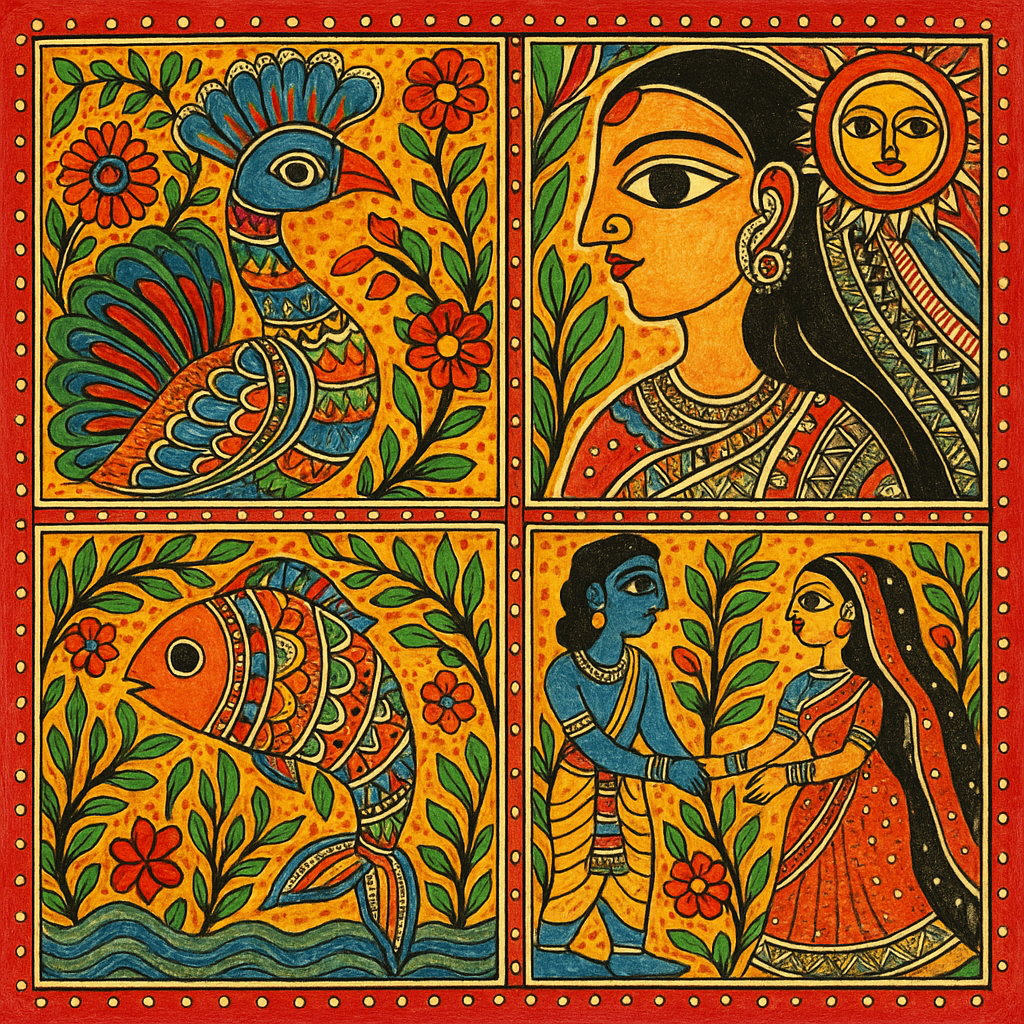
In the villages of Mithila, women have painted vivid Madhubani folk art for centuries — a living, GI-tagged tradition of gods, nature and celebration still practised today.
From the first great empires of India to the birth of two world religions and the spark of the freedom struggle, Bihar has shaped the subcontinent for over 2,500 years.
Bihar takes its name from vihara, the Buddhist monasteries that once dotted the land. Here the kingdom of Magadha rose to become India's first great power, ruled first from Rajgir and then from Pataliputra (modern Patna). The Mauryan Empire (321–185 BCE) of Chandragupta and Emperor Ashoka, and later the Gupta "Golden Age" (c. 320–550 CE), governed much of the subcontinent from Bihar's soil. At Bodh Gaya the Buddha attained enlightenment, at Pawapuri Lord Mahavira attained nirvana, and at Vaishali the Licchavis ran one of the world's earliest republics, while Nalanda and Vikramshila drew scholars from across Asia.
The Buddhist Pala dynasty (8th–12th century) built the great university of Vikramshila and made Bihar a centre of learning and art. After the universities fell around 1193, Bihar passed through the Delhi Sultanate and the Mughal Empire. Sher Shah Suri — born in Sasaram, Bihar — briefly overthrew the Mughals and built the Grand Trunk Road that still links the subcontinent from Kabul to Bengal.
After the Battle of Buxar (1764), Bihar came under British rule as part of the Bengal Presidency, becoming a separate province in 1912. In 1917 Mahatma Gandhi launched the Champaran Satyagraha here — his first mass civil-disobedience movement in India, in support of exploited indigo farmers — helping to ignite the national freedom struggle.
After independence in 1947 Bihar reorganised its districts, and in 2000 its southern plateau became the new state of Jharkhand. Today Bihar is one of India's fastest-growing state economies with one of its youngest populations — investing in roads, education and healthcare while reviving its extraordinary heritage through tourism. That living heritage is the very journey Bihar Bhraman invites you to take.